
Customer support used to be simple.
A customer had a question, so they sent an email.
Your support team replied.
Problem solved.
Today, customer communication looks very different.
A customer might:
- Send a message on Instagram.
- Follow up through live chat.
- Reply via email.
- Contact your support team on WhatsApp.
And they expect your team to know the full conversation history every step of the way.
The problem is that many businesses still manage these channels separately.
The result?
Customers repeat themselves.
Agents waste time searching for information.
Conversations become fragmented.
And support quality suffers.
This is exactly why omnichannel helpdesks have become essential for modern businesses.
In this guide at Servia, we’ll explain what an omnichannel helpdesk is, how it works, why it matters, and how it helps businesses deliver faster and more consistent customer support.
What is an Omnichannel Helpdesk?
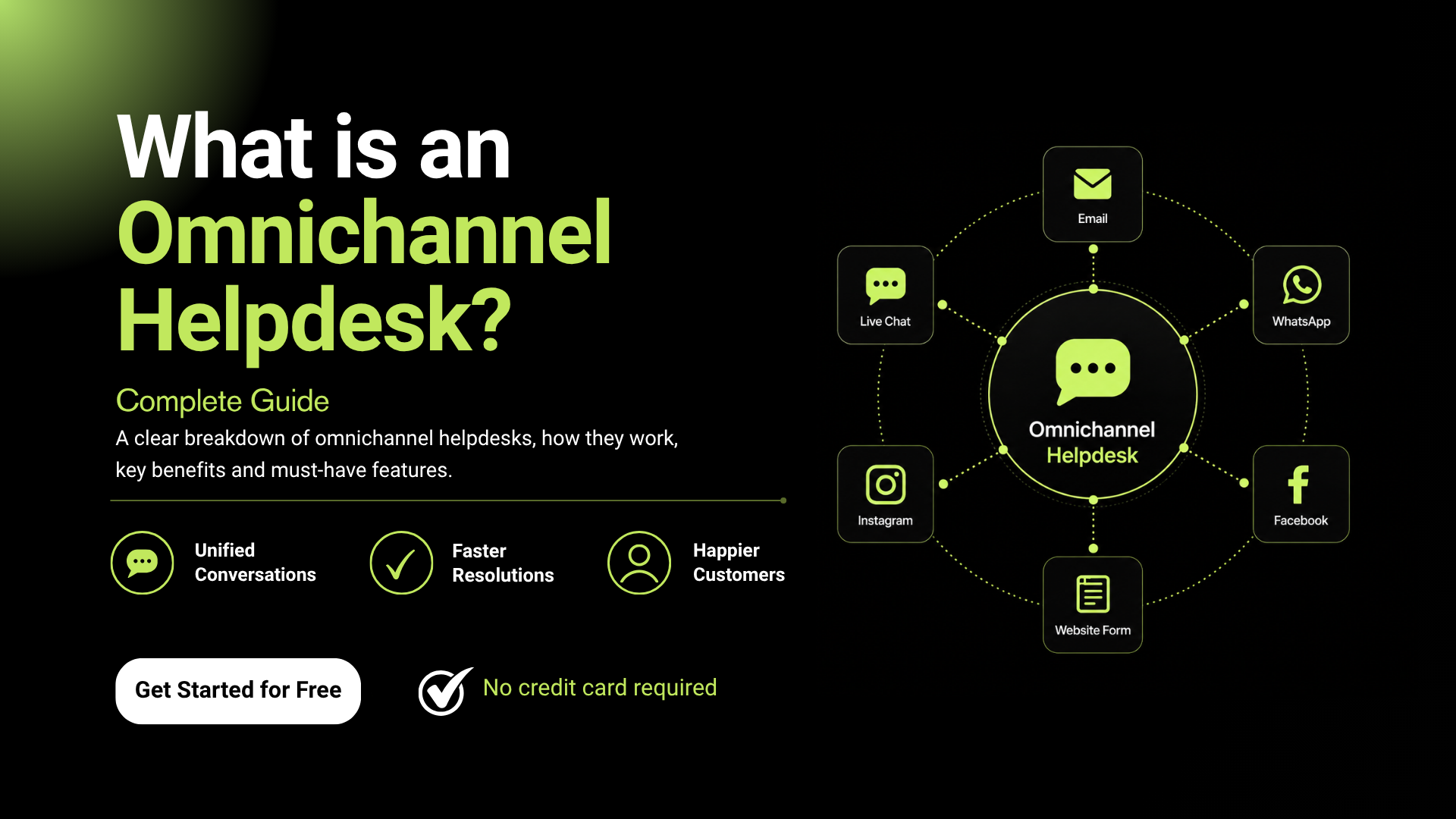
An omnichannel helpdesk is a customer support platform that brings all customer conversations into one centralized workspace.
Instead of managing separate inboxes for:
- Live chat
- Facebook Messenger
- SMS
- Website forms
…the helpdesk combines everything into a single system.
More importantly, it keeps the entire customer conversation history connected.
This means if a customer starts a conversation on live chat and later follows up by email, the support agent can immediately see the previous interaction.
The customer doesn’t need to explain everything again.
The support experience feels seamless.
Related: Best Omnichannel Customer Support Software for Ecommerce Brands (2026)
How Does an Omnichannel Helpdesk Work?
The process is surprisingly straightforward.
Step 1: Collect Conversations
The helpdesk connects to all customer communication channels.
Messages from:
- Chat
- Social media
- Messaging apps
are automatically pulled into one dashboard.
Step 2: Create a Unified Customer Profile
The system identifies the customer across channels.
Instead of seeing five separate conversations, agents see one complete customer history.
This includes:
- Previous tickets
- Past conversations
- Purchase history
- Support interactions
Everything is available in one place.
Step 3: Organize and Route Requests
Modern helpdesks use automation and AI to:
- Categorize requests
- Assign tickets
- Prioritize urgent issues
- Route conversations to the right teams
This reduces manual work and speeds up response times.
Step 4: Support Teams Respond Faster
Because agents have full context, they spend less time searching for information and more time solving problems.
Customers receive quicker and more accurate responses.
Related: How AI Ticket Routing Reduces Response Times and Boosts Customer Satisfaction (2026)
Key Features to Look For in an Omnichannel Helpdesk
Not every platform offers the same capabilities.
When evaluating solutions, focus on features that improve both customer experience and operational efficiency.
Unified Inbox
A single workspace where all conversations appear.
This is the foundation of any omnichannel platform.
Customer History Tracking
Agents should be able to see previous conversations and interactions instantly.
Context is what makes omnichannel support valuable.
AI-Powered Ticket Routing
AI can automatically identify:
- Customer intent
- Urgency
- Ticket category
and route conversations to the right person.
This reduces delays and manual triage.
Automation Workflows
Automation helps with:
- Ticket assignment
- Follow-ups
- Status updates
- Escalations
This allows teams to handle higher ticket volumes without adding complexity.
Analytics and Reporting
Support leaders need visibility into:
- Response times
- Resolution rates
- Customer satisfaction
- Team performance
Reporting helps identify operational bottlenecks and improvement opportunities.
Related: The 5 Best AI Chatbots for Customer Service in 2026
Common Challenges Businesses Face Without Omnichannel Support
Many businesses don’t realize how much inefficiency exists until they centralize their support operations.
Common issues include:
- Duplicate responses
- Lost conversations
- Missed follow-ups
- Slow response times
- Agent confusion
- Customer frustration
As ticket volume grows, these problems become increasingly expensive.
An omnichannel helpdesk helps eliminate these operational gaps.
Final Takeaway
Customer support is no longer limited to a single inbox.
Customers move between channels constantly, and they expect businesses to keep up.
An omnichannel helpdesk brings all customer conversations together into one connected system, helping teams deliver faster, more consistent, and more personalized support.
As businesses grow, support complexity grows with them.
The companies that provide the best customer experience aren’t necessarily the ones with the largest support teams.
They’re the ones with the clearest systems.
An omnichannel helpdesk is one of the most effective ways to build those systems.
Related: Top 6 AI Helpdesk Software Compared: Features, Pricing & Use Cases (2026)