Ecommerce customer support has changed completely over the last few years.
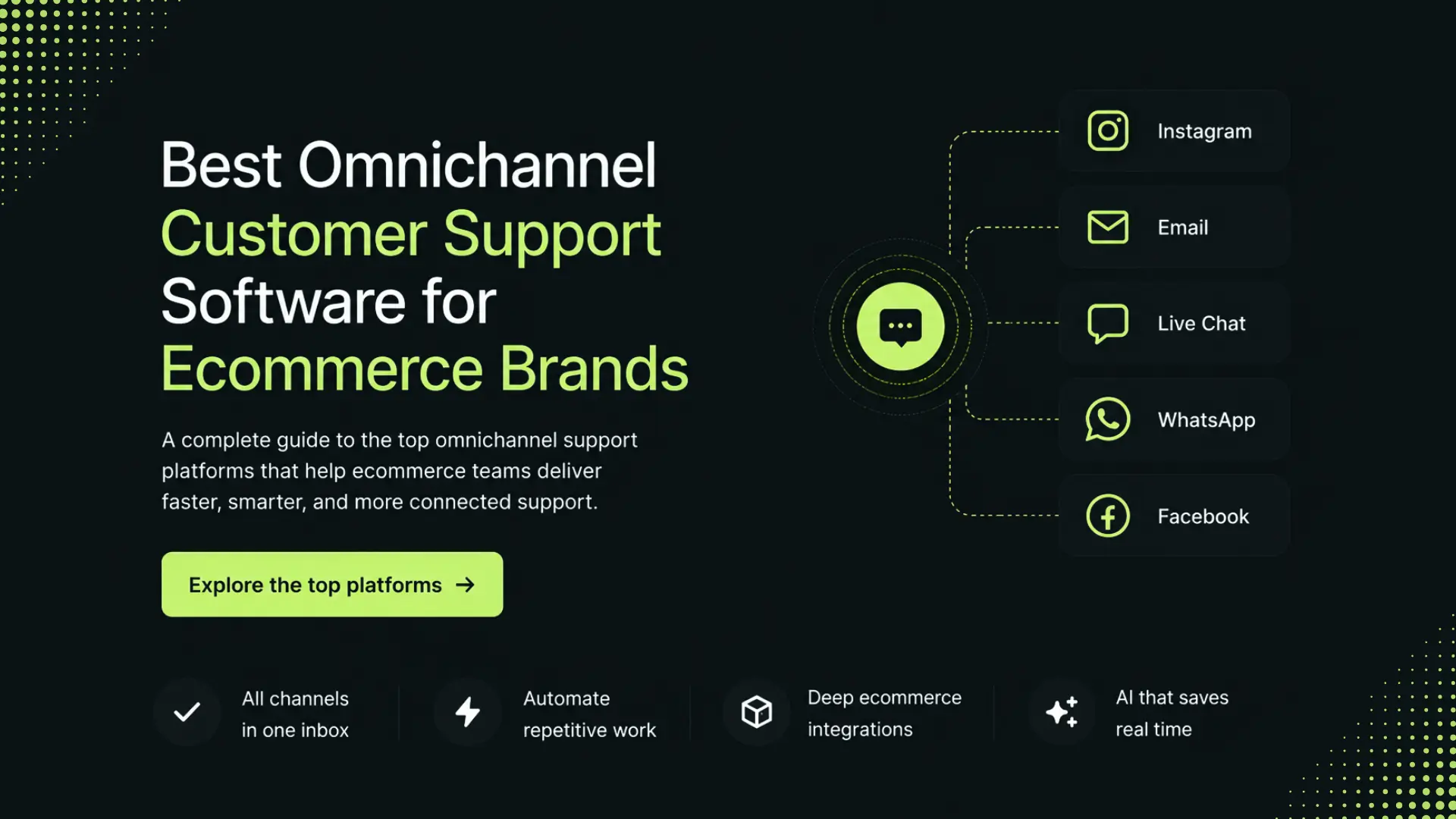
Customers no longer contact brands through just one channel. They might:
- DM you on Instagram
- Email you about shipping
- Follow up through live chat
- Then ask for updates on WhatsApp
And they expect your team to already know the full conversation.
That’s why omnichannel support matters.
Without it, support feels disconnected and frustrating. Customers repeat themselves, agents switch between tabs all day, and important messages get missed.
The right omnichannel support software solves this by bringing everything into one shared system with full customer context.
This guide on Servia breaks down the best omnichannel customer support platforms for ecommerce brands in 2026, including their strengths, limitations, and ideal use cases.
What “Omnichannel” Actually Means
A lot of tools claim to be omnichannel, but many are really just multichannel.
There’s a difference.
Multichannel Support
You support customers on multiple platforms:
- Email
- Chat
- Social media
- Phone
But the conversations stay separate.
Omnichannel Support
Everything connects into one continuous conversation.
If a customer:
- Starts with Instagram DM
- Moves to email
- Then chats on your site
Your team still sees the full history in one place.
That’s the real goal.
Related: Best Customer Support Software E-commerce Brands Need in 2026
Best Omnichannel Customer Support Software for Ecommerce
Gorgias
Best for: Shopify and DTC ecommerce brands
Gorgias is built specifically for ecommerce support. Unlike general helpdesks, it deeply integrates with platforms like Shopify so agents can see:
• Orders
• Shipping status
• Refund history
• Customer spending
…without leaving the dashboard.
Unified inbox for email, chat, Instagram, Facebook, and WhatsApp
E-commerce-focused automation
Revenue tracking tied to support conversations
Fast macros for repetitive replies
Real-world example
Customer asks:
“Where’s my order?”
Agent instantly sees:
- Order status
- Tracking number
- Delivery updates
No switching tabs.
Limitation
Works best for Shopify-first brands. Less flexible outside of the ecommerce ecosystems.
Zendesk
Best for: Large or scaling ecommerce businesses
Zendesk is one of the most established omnichannel platforms available.
It supports:
• Email
• Live chat
• Social media
• Voice
• Messaging apps
…inside one workspace.
Why ecommerce brands use it
Strong automation
Enterprise-grade reporting
Huge integration ecosystem
AI ticket classification
Best use case
Brands handling high ticket volume across many channels.
Limitation
Can become expensive quickly, especially with AI add-ons.
Freshdesk
Best for: Growing ecommerce teams on a budget
Freshdesk is popular because it balances:
• Simplicity
• Automation
• Affordability
Its Freddy AI assistant helps with:
• Ticket prioritization
• Suggested replies
• Workflow automation
Why does it work well for ecommerce
WhatsApp support
Social integrations
Easy onboarding
Good value for smaller teams
Best use case
Brands growing beyond basic support tools but not ready for enterprise pricing.
Limitation
Advanced reporting and customization are limited compared to Zendesk.
Intercom
Best for: Ecommerce brands focused on conversational support
Intercom is more chat-focused than ticket-focused.
Its AI agent, Fin, can automatically resolve many repetitive customer questions.
Excellent live chat experience
AI-powered conversations
Product recommendations and onboarding flows
Messenger-style customer interactions
Best use case
Modern ecommerce brands prioritize fast chat support.
Limitation
Pricing increases rapidly as usage grows.
eDesk
Best for: Multi-channel ecommerce sellers
eDesk is specifically designed for brands selling across:
• Amazon
• Shopify
• Walmart
• eBay
• Multiple marketplaces
It pulls order data directly into support conversations.
Marketplace integrations
AI automation trained for ecommerce workflows
SLA tracking for marketplaces
Unified order view
Best use case
Brands selling on multiple marketplaces simultaneously.
Limitation
Less polished UI compared to newer platforms.
🏆 Recommended Choice
Servia
Best for: Ecommerce startups that want AI-driven support without complexity
Servia focuses on simplifying customer conversations through AI prioritization and automation.
Instead of only organizing tickets, it helps teams:
• Identify urgent conversations
• Reduce repetitive work
• Keep all channels centralized
AI-driven conversation management
Unified inbox experience
Smart prioritization
Cleaner workflow for small teams
Best use case
Fast-growing ecommerce startups are handling increasing support volume with limited staff.
Limitation
Still newer compared to legacy enterprise platforms.
Quick Comparison
Best ecommerce omnichannel customer support tools (2026)
| Platform |
Best For |
Main Strength |
Complexity |
Team Size |
| Gorgias |
Shopify brands |
Ecommerce automation |
Medium |
Small–Mid |
| Zendesk |
Enterprise ecommerce |
Scalability |
High |
Mid–Large |
| Freshdesk |
Budget-conscious brands |
Affordability |
Low |
Small–Mid |
| Intercom |
Conversational support |
AI chat support |
Medium |
Small–Large |
| eDesk |
Marketplace sellers |
Marketplace integrations |
Medium |
Mid |
| 🏆 Servia |
Startup ecommerce brands |
AI prioritization |
Low |
Small |
What Features Actually Matter Most?
A lot of ecommerce brands get distracted by feature lists.
But these are the things that genuinely matter:
Unified Customer History
Your agents should see everything in one place.
Fast Automation
Shipping questions, returns, and FAQs should be automated.
Ecommerce Integrations
Support software should connect directly with:
- Shopify
- WooCommerce
- Amazon
- Payment systems
AI that saves real time
Not “AI for marketing”
Actual AI that reduces workload.
Related: Top 6 AI Helpdesk Software Compared: Features, Pricing & Use Cases (2026)
Common Mistakes Ecommerce Brands Make
Many ecommerce brands rush into software decisions too early, focusing on the wrong signals instead of long-term scalability.
Most common decision triggers:
✓ Big brand names
✓ Fancy feature lists
✓ Cheap pricing offers
Will this still work when our order volume doubles?
Instead of asking about features or price, the real decision should focus on scalability, automation depth, and operational stability under growth pressure.
That’s the question that actually determines long-term success.
What Reddit Users and Support Teams Keep Repeating
Across ecommerce and customer support discussions, one pattern appears constantly:
Teams care less about flashy features and more about:
- Reliability
- Unified conversations
- Simplicity under high volume
That’s important because support tools only help when they reduce chaos – not create more of it.
Final Takeaway
The best omnichannel customer support software for ecommerce brands depends on how your business operates.
- Shopify-heavy DTC brand → Gorgias
- Large-scale support operation → Zendesk
- Budget-conscious growing team → Freshdesk
- Marketplace-focused seller → eDesk
- Chat-first modern brand → Intercom
- Startup wanting AI simplicity → Servia
But regardless of the tool, the real goal is the same:
Create one smooth customer conversation across every channel.
Because customers don’t think in channels.
They just expect support to work.
FAQs (Omnichannel Customer Support Software)
01
What is omnichannel customer support software?
Omnichannel customer support software combines all customer communication channels – such as email, live chat, Instagram, WhatsApp, and Facebook – into one unified system so support teams can manage conversations from a single dashboard.
02
Why is omnichannel support important for ecommerce brands?
Ecommerce customers often contact brands through multiple platforms. Omnichannel support helps businesses keep conversations connected, reduce message gaps, and deliver faster, more consistent customer experiences.
03
What is the difference between omnichannel and multichannel support?
Multichannel support allows communication across several channels, but conversations stay separate. Omnichannel support connects all channels, allowing agents to see the full customer history in one place.
04
Which omnichannel support software is best for Shopify stores?
Gorgias is one of the most popular options for Shopify brands because it integrates directly with orders, shipping data, refunds, and customer details inside the support dashboard.
05
Can AI improve omnichannel customer support?
Yes. AI can automate repetitive questions, prioritize urgent tickets, suggest replies, and help ecommerce teams respond faster across multiple channels without increasing team size.
06
Is omnichannel support software suitable for small ecommerce businesses?
Absolutely. Many tools like Freshdesk, Tidio, and Servia offer affordable or scalable solutions designed specifically for growing ecommerce businesses with smaller support teams.