
If you’ve ever experienced online shopping, you already have an idea about how customer support can make or break an online business. A damaged product, a refund request, a sizing issue, or a late delivery – these things define if a customer will become a loyal customer or if they will never shop with you again.
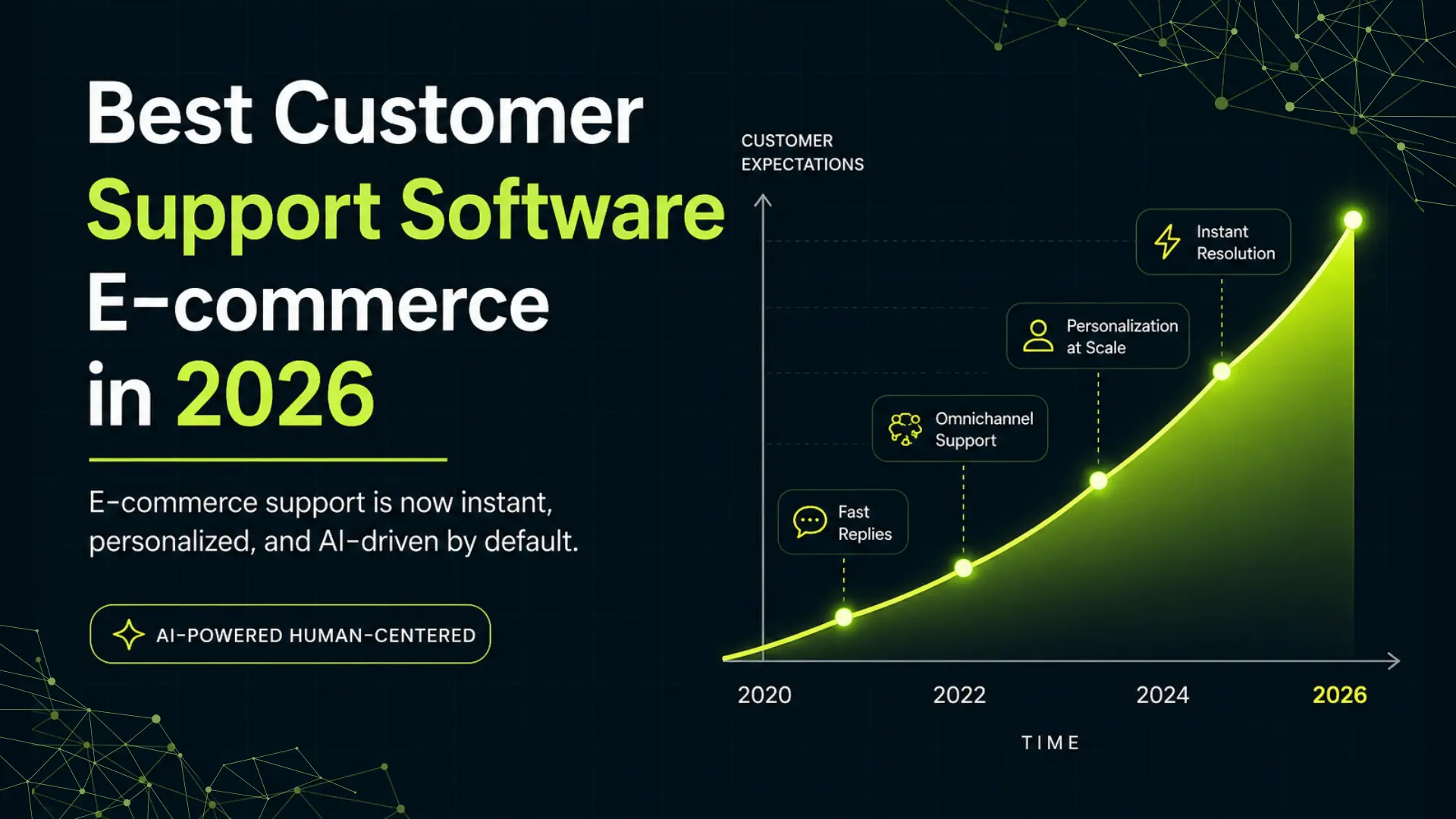
For online businesses competing in 2026, polite agents and fast replies aren’t enough. Customers expect personalized, consistent, and instant support across every platform they use, including chat, WhatsApp, Instagram, SMS, and even email.
That is why choosing the best customer support software for online businesses or ecommerce websites has become a crucial and strategic growth decision rather than just an operational one.
In this guide, we’ll break down:
- Key indications to look for in modern online business support tools
- Popular client support platforms (and their restrictions)
- How AI‑powered helpdesks like Servia are redefining online business support
- What e‑commerce clients actually expect from support today
- Why traditional helpdesks fail e-commerce stores
After reading, you will be able to choose the right AI helpdesk software. This article will help you if you run a DTC band, e-commerce marketplace, or are establishing an online startup.
The E‑commerce Customer Experience Problem
From a client’s point of view, help desk isn’t a department—it’s the brand.
When anything goes wrong, clients want:
- Quick fixes
- Clear timelines
- No repetition
- Help on their preferred medium
Sadly, many online businesses still rely on disintegrated systems, different tools for every platform, such as social media, spreadsheets, and email, social media, for tracking orders.
This results in:
- Delayed responses
- Missed messages
- Negative reviews
- Frustrated customers
Modern online brands are solving this with unified inbox software, AI-powered customer service, and omnichannel helpdesk systems.
Why Traditional Helpdesks Don’t Work for E‑commerce
Legacy ticketing tools weren’t built for fast-paced online stores, it was rather built for internal IT teams.
Here’s what they lack:
Lack of Channel Context
Customers might message you on Instagram or Facebook, then follow up via email or built-in chats. Without a unified customer care system, clients lose context, and customers repeat themselves multiple times.
Manual, Repetitive Work
Delivery questions, return policy, and order status make up the majority of tickets received, but most of the teams handle these tickets manually rather than using automated response systems.
Slow Response Times During High Traffic
Holiday seasons, influencer campaigns, or flash sales can flood support inboxes overnight. While the traditional management software may claim big, but they can’t even scale the tickets without adding manpower.
This is why online businesses and e‑commerce brands are adopting AI customer service automation rapidly.
What to Look for in the Best Customer Support Software for E‑commerce
Not all traditional elpdesk are eligible for online businesses. Here is what actually matters:
Built for Scale
Your helpdesk should grow with your store.
That means:
- No surprise pricing during peak seasons
- Cloud helpdesk software
- Scalable support software
E‑commerce‑Friendly Workflows
Support tools should integrate smoothly with your store operations, enabling:
- Order‑based support flows
- Automated ticketing systems
- Refund and return automation
AI‑Powered Automation
The best platforms use AI customer service to:
- Reduce agent workload
- Instantly answer FAQs
- Automate order‑related queries
- Route tickets intelligently
Look for features like:
- AI ticket routing
- GPT-powered chatbot
- AI virtual assistant
- Intelligent support workflows
Omnichannel Support in One Inbox
Your support should be provided everywhere, similar to how your customers are everywhere.
A legit omnichannel ticketing system singles:
- In‑app and website chat
- Live chat
- Social media DMs
All inside one unified inbox software.
Popular Customer Support Software for E‑commerce (And Their Limits)
Let’s look at some of the tools many e-commerce businesses consider:
Freshdesk
Freshdesk is a popular online helpdesk system that offers multichannel customer service, but deeper AI workflow automation is limited unless upgraded, while it may be suitable for smaller teams or small businesses.
Help Scout
Help Scout is easy to use but may lack the advanced AI support platforms’ capabilities required by fast‑scaling e‑commerce brands. It focuses on shared inbox support and simplicity.
Each of these platforms solves some problems, but only a few are truly built for what is really needed; AI-first high-volume online businesses support.
Zendesk
Zendesk is the most well-known online business helpdesk solution, which is used by large-scale brands. Although it is a powerful software, most of the brands find it to be expensive and complex as the number of tickets increases.
Gorgias
Gorgias, which is famous among Shopify stores. It focuses a lot more on email and social support. However, AI capabilities and advanced automation often come at higher pricing tiers.
The Shift to AI‑Powered E‑commerce Support
In the new day, online businesses are moving ahead of tickets. With the help of AI-powered customer help-desks, businesses can;
Resolve up to 70–80% of queries automatically
- Repeat purchases and improve CSAT
- Offer 24/7 instant assistance
- Reduce support costs
This shift is driving the adoption of smart customer support systems.
Servia Ai is designed for stores that need scale, speed, and simplicity, along with large-scale online businesses.
Servia focuses on customer service and resolution rather than focusing on ticket volume.
AI Agents That Handle Real Electronic Commerce Queries
Servia’s AI agents act as a true helpdesk chatbot, which is capable of:
- Escalating complex cases intelligently
- Answering order status questions
- Explaining return and refund policies
- Handling delivery issues and much more
Powered by an AI decision engine and conversational AI support, Servia delivers human‑like responses at scale.
Single Inbox Across All Channels
With the new technology system, Servia’s email chat social support platform, the teams manage all the problems and conversations in one place, without the fear of lost messages, conversations, issues, or tickets. No lost messages, no context switching.
Intelligent Automation That Saves Time
Servia helps support process automation through:
- Follow‑up automation
- Automated ticket routing
- Priority handling
- AI‑generated replies
This allows the teams to focus on high-value conversations and issues.
Built for Growing E‑commerce Brands
Servia is the best Saas Helpdesk Software ideal for:
- Subscription‑based stores
- DTC brands
- Online marketplaces
Learn how Servia supports modern online business teams at Servia:
Customer Experience: Before and After AI Support
Before AI Support
- Inconsistent replies
- Long wait times during sales
- Repetitive customer questions
- Overworked agents
After AI‑Powered Support with Servia
- Instant answers, 24/7
- Consistent brand voice
- Faster resolutions
- Happier customers and higher retention
This is the power of AI customer service automation.
Why Servia Is One of the Best Customer Support Software Choices for E‑commerce
- Fast setup
- Designed for real customer conversations
- AI‑first architecture
- Omnichannel helpdesk capabilities
- Scalable pricing
Servia helps brands design a smart customer support system instead of managing chaos. Explore More About Servia’s AI‑powered platform.
Final Thoughts
In e‑commerce, customer experience is the product. Choosing the best customer support software for e‑commerce means choosing speed, intelligence, and scalability.
Legacy tools weren’t built for modern online retail, but AI‑powered platforms like Servia are. If you’re ready to turn support into a competitive advantage, now is the time to rethink how your brand serves customers.
What is the best customer support software for e‑commerce businesses?
The best customer support software for e‑commerce is one that offers omnichannel support, AI‑powered automation, and scalability. Platforms like Servia are built specifically to handle high‑volume, fast‑paced e‑commerce customer interactions.
Why do e‑commerce brands need AI‑powered customer support?
AI‑powered customer support helps e‑commerce brands respond instantly, reduce repetitive work, and provide 24/7 assistance. It improves customer satisfaction while lowering operational costs.
What channels should e‑commerce customer support cover?
E‑commerce support should include email, live chat, social media, and in‑app messaging. A centralized omnichannel helpdesk ensures no customer message is missed.
How does AI automation improve e‑commerce customer experience?
AI automation enables faster responses, consistent answers, and intelligent ticket routing. Customers get quick solutions, and agents focus on complex issues that require human empathy.
Is Servia suitable for small and growing e‑commerce brands?
Yes. Servia is designed for startups and growing e‑commerce brands that need scalable, easy‑to‑use AI helpdesk software without enterprise complexity.